

Although having a breadth of options available to you can generally be a good thing, it can also be exhausting making a choice. With all the information out there on non-surgical beauty treatments, it can be hard to distinguish truth from fiction and even harder to decide what option is right for you.
When it comes to addressing a variety of skin quality concerns, many treatments fall under two broad categories: laser resurfacing and microneedling. While there are certainly alternatives out there, for the sake of simplifying an already tricky decision, let’s focus on these two popular flavours of cosmetic treatments.
How Do Laser Resurfacing and Microneedling Work?
Before jumping into a breakdown of the uses for laser resurfacing and microneedling, let’s learn more about how they actually work.
The Science of Laser Resurfacing
A laser, short for “light amplification by stimulated emission of radiation,” is (as the name suggests) an intense beam of light. Therefore, laser resurfacing entails directing light energy towards an area of concern.
The light itself interacts with molecules in the skin to manipulate their function. One example of this involves melanocytes, which are the cells responsible for skin pigmentation. Laser resurfacing can actually reduce melanocyte production, which addresses pigmentation concerns like acne scarring and vascularity.
The heat from the light also impacts molecules in the skin. Our skin cells react to the heat from laser resurfacing with a wound response. Laser resurfacing can stimulate blood flow and increase collagen and elastin fibres. These molecules are (strategically) reorganized to repair the areas in which the heat was applied, effectively targeting skin texture concerns like fine lines, wrinkles, and hypertrophic scarring.
Laser resurfacing can also be divided into two broad types: ablative and non-ablative. Ablative lasers impact the surface of the skin as well as deeper layers. Non-ablative lasers get straight to the underlying skin structures without directly affecting the surface.
The Mechanisms of Microneedling
Microneedling involves the use of microscopic needles to stimulate small injuries to the surface of the skin. You might be familiar with microneedling rollers (also known as derma rollers) that some folks use at home. The safest and most effective form of microneedling, however, is with a pen that shoots in and out of the skin at a straight angle.
The reason that rollers are not the best strategy for microneedling is because they actually tear the skin as they move, entering and exiting at an angle to create a burrow instead of a clean channel.
This distinction is important because one of the reasons microneedling is employed is to create a more direct pathway for topical ingredients to penetrate the skin. A precise channel means more precise integration.
The micro-injury is the other primary function of microneedling, which, similar to laser, stimulates collagen and elastin production during healing. This means it works to address skin laxity concerns and overall regeneration for healthier-looking skin.
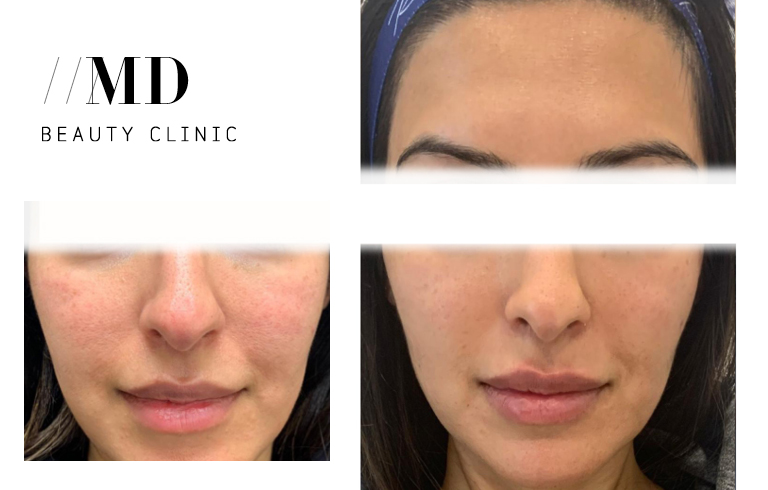
Before and After Microneedling.
Microneedling can also be combined with radiofrequency (RF) technology to increase the elasticity effects. RF has the added benefit of melting fat through the application of heat, so it slims as well as tightens.
What Are the Treatment Areas and Indications for Each?
At MD Beauty, your options for laser resurfacing include HALO Tribrid, HALO, and MOXI treatments. For microneedling, you can choose between the standard DP4 treatment or Morpheus8, which includes radiofrequency.
Laser resurfacing is generally best for narrow targets because the laser is incredibly precise. The width, depth, and intensity can be adjusted for customizable results. This procedure can address textural issues, but it really shines when it comes to pigmentation concerns. Its intensity means that laser resurfacing results are seen much sooner and last much longer.
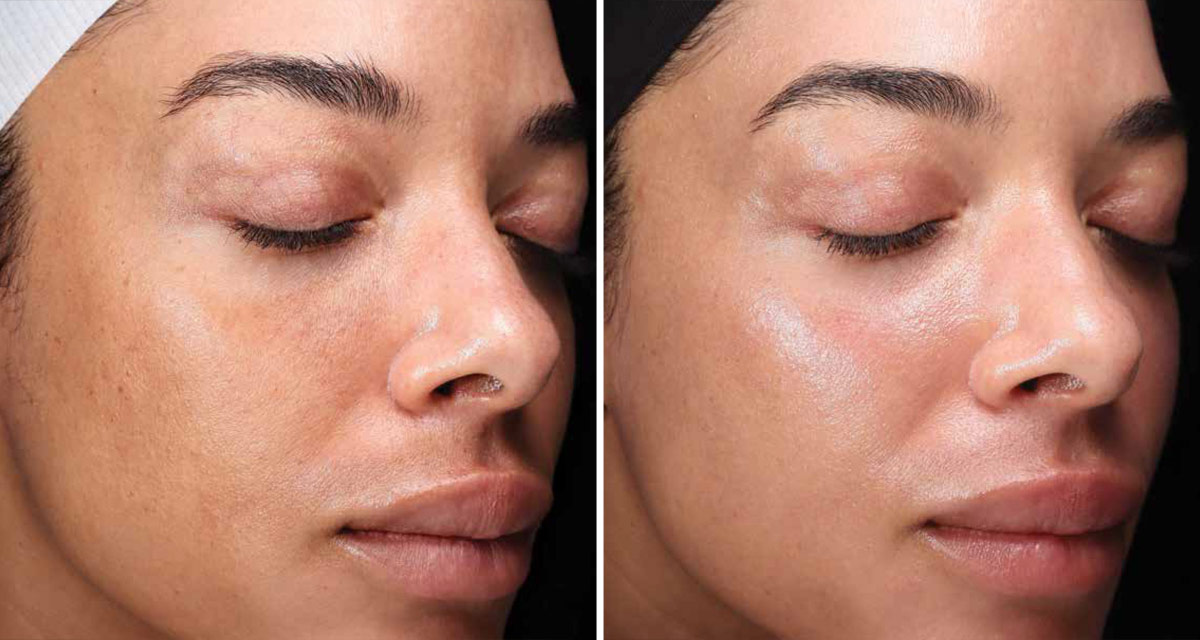
Before and After 1 HALO Tribrid treatment. Images courtesy of Sciton.
- HALO: Combines ablative and non-ablative wavelengths to address a host of concerns. HALO works to reduce fine lines and wrinkles, treat acne scars and texture, minimize dyschromia and hyperpigmentation, shrink pore size, and even reverse sun damage.
- MOXI: A non-ablative laser perfect for entry-level concerns. MOXI can address melasma, reduce uneven skin tone and pigmentation, minimize superficial texture, and improve skin quality overall.
- HALO Tribrid: A combination of three wavelengths to accomplish the results of both HALO and MOXI laser resurfacing treatments. The Tribrid can do it all, from deeper restructuring to surface-level restoration.
If you’re looking to address a broader surface area, then microneedling is your best bet. Whether it’s the DP4 pen or a Morpheus8 handpiece, microneedling can be applied just about anywhere. The recovery time for these treatments is significantly lower than laser too, which makes them a good place to start for broader skin concerns.
- Microneedling with DP4: A standard microneedling facial can help with skin laxity due to collagen/elastin loss, sun damage and overall hyperpigmentation, and scarring.
- Morpheus8: Can be used on both the face and body to improve the appearance of fine lines and wrinkles, treat hyperpigmentation, contour and remodel the skin, and even minimize stretch marks.