


The beauty industry has a long and detailed history of exclusionary practices. The majority of technologies and treatments are developed by and tested on white skin, creating a massive knowledge and service gap for people of colour.
In some cases, technologies have not been safe for dark skin, which begs the question: is this safety issue inherent to the technology or is it due to a failure in the development stage? Major strides have been made to date that have provided more inclusive skin treatments for all skin types, but at the same time, there is still much needed progress that needs to be made.
We’ve recently had a lot of questions around which treatments are safe and recommended for melanated skin, so we thought it would be good to give a break-down of some of the most effective non-surgical treatments for melanin-rich skin.
What is melanin-rich or melanated skin?
In case you haven’t heard the term melanin before, melanin cells (also known as melanocytes) are basically what pigments the skin or gives your skin the colour that it has. In the cosmetic industry we have something called the Fitzpatrick scale where we numerically identify different skin types. The scale goes from 1-6, where 1 is the lightest skin colour or skin type and 6 is the deepest in colour.
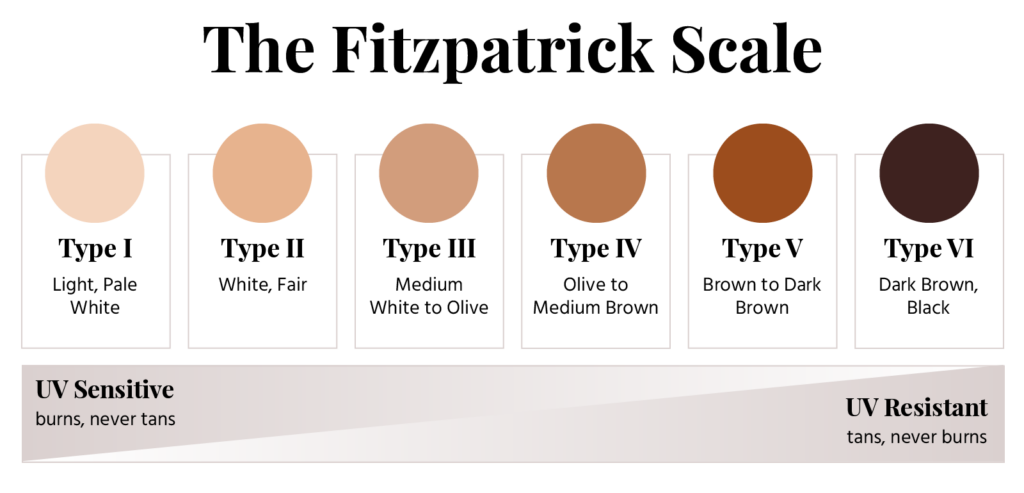
If you’re on the deeper end of the Fitzpatrick scale it basically means that you have more melanin in the skin, or what we like to call melanin-rich skin. So when we’re talking about which treatments are safe for melanated skin, we’re typically referring to Fitzpatrick skin types of 4, 5, and 6.
Treatments that are safe for melanin-rich skin—and treatments to be wary of
All of the treatments and products that we provide at MD Beauty Clinic, with the exception of IPL, are safe for Black and pigmented skin. Our Miracle 10 skincare line is recommended for and has shown amazing results with all skin types.
IPL or Intense Pulsed Light therapy technology unfortunately just hasn’t been able to overcome this major flaw. In general patients choose this technology when they’re looking to treat age spots, sun damage, skin discolouration caused by acne, unwanted freckles or birthmarks, or broken blood vessels. Because IPL targets melanin in the skin, it runs the risk of burning Black skin. So if you have a Fitzpatrick skin type ranging between 4 and 6 on the scale, you definitely want to stay away from a treatment like IPL.
If you have deeper darker skin you may also struggle with specific skin concerns that your skin type can be more prone to. For instance, darker skin tones can often produce more oil and sebum, which can make them more acne prone.
Safe treatments for acne prone melanin-rich skin types that we recommend and we’ve seen to be super effective are regular Miracle 10 peel treatments in combination with Morpheus8. Our Miracle 10 peel treatments are strong enough to give your skin a deep cleanse and pick me up, but they’ll never leave your skin feeling raw or damaged. They are great at keeping those acne break outs at bay.
Peel treatments paired with Morpheus8 treatments we find is the perfect combo to combat acne overall, with Morpheus 8 having the ability to kill acne bacteria right at its source, while at the same time not damaging sensitive, melanin-rich skin.
Another skin concern that some of our patients of colour often report is irregular skin pigmentation. Again, for this particular skin concern we might recommend a combination treatment approach of PicoWay Resolve, which uses picosecond technology in order to combat skin imperfections and results in brighter, smoother and more uniform skin tone, alongside Morpheus8 and Miracle 10 peel treatments.
No matter your skin concern, if you have melanin-rich skin and you’ve got questions about the safety of a treatment never hesitate to ask questions. Be sure that your provider is knowledgeable about how to treat melanin-rich skin conditions.
Your provider should be able to make the correct assessment about what will address your particular skin concern for your skin type and to ensure that whatever your skin condition, that it doesn’t worsen. And if you’ve had a reaction or a bad experience to a particular non-surgical treatment in the past, be sure your provider knows so that a patch test can be provided and a skincare regimen put in place to ensure the success of your results.