
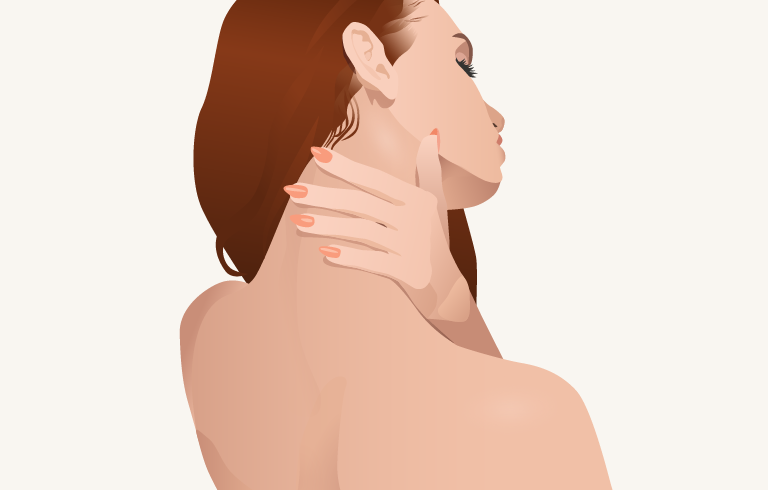
If you’ve been anywhere near the internet lately you’ve heard about something called “trap tox” as it’s the latest medical aesthetics treatment to take TikTok by storm. While “trap tox” as a social media sensation may be new, the treatment itself is not.
Trap Tox refers to the injection of Botox into the trapezius muscle, one of the many therapeutic indications of the drug. In fact, health care providers have been injecting it for multiple different conditions for over 20 years now. It is one of the areas we target as part of the migraine treatment protocol, as well as for cervical dystonia, which are both “on label” indications of the drug.
And patients suffering from neck and shoulder pain have long sought out this treatment to help relax tension and even improve mobility. These are what we call therapeutic indications of Botox. There are cosmetic effects as well—and this is definitely what has the internet all excited.
When we inject Botox into the muscle, we temporarily inhibit its ability to contract. And without that regular exercise of contraction, the muscle atrophies and gets smaller. This can create a slimming effect for the patient, which can be a very nice aesthetic outcome for the right individual.
While “trap tox” is a safe and effective therapeutic treatment for the right candidate, caution should always be taken when undergoing a new treatment.
What are the risks of “trap tox”?
The medical risks of Botox in the trapezius muscles are similar to the risks associated with neuromodulator injection in the face. There may be some differences in potential side effects depending on the treatment protocol and the expertise of your provider, and that’s why the consultation process is so key.
Short term side effects are pain, bruising and discomfort at the injection site. Long term side effects may include weakness or paralysis of the muscle, and spread to nearby muscles. There are additional risks, and these need to be carefully discussed with your treatment provider.
From an aesthetic perspective, “trap tox” may change your look in a way that doesn’t suit you or that you didn’t intend on. One of the reasons this treatment has taken the internet by storm is due to its ability to lengthen and elongate the look of the neck. But like any aesthetic treatment, what might work beautifully on one patient, doesn’t totally suit the next.
It’s important your provider has a good aesthetic eye and can help you envision your final look. The “swan neck” might be great on some, but it’s not perfect for everyone. The good news here is that the effects of Botox are not permanent. If a longer neck and smaller trap muscles aren’t your thing, take heart in knowing that these results are not permanent. Results typically wear off between 4 and 8 months.
How does “trap tox” work?
As a neuromodulator, Botox disrupts the communication between the nerves and muscles so that the muscle can’t contract anymore, or at least not with the same strength. With facial toxin treatments, our goal is to soften the contraction so that we smooth out those lines at rest.
View this post on Instagram
In larger muscle groups like the traps, or even the masseters, our goal is to limit the contraction so that we get mild atrophy of the muscle, creating the slimming effect. When treating the trapezius, we use anywhere between 15 and 100 units per side, depending on how thick and developed your muscles are.
The results tend to last a bit longer in the body than in the face, but everyone is different. If you didn’t get the result you were looking for with your first treatment, it’s important to go back to your initial provider. That way we can assess your dosage, the outcome, and tweak our treatment plan for next time.
Who is a good candidate for “trap tox”?
If you’re looking to achieve that “swan neck” look it’s important to speak to a knowledgeable provider who has experience with the therapeutic and cosmetic applications of Botox in the trap muscles. Together you will decide whether achieving an elongated neck and slimmer shoulder area is the right choice for your goals and existing anatomy.
If your trapezius muscle is week or underdeveloped, we are not going to suggest this treatment for you. Certain medical conditions and medications may preclude you from treatment, which is why it’s always important to have an extensive consult before undergoing this treatment.
If you suffer from migraines or neck and shoulder pain, you may find relief with Botox into the trapezius muscle. But of course it’s important to speak to your provider about all the risks, benefits unintended aesthetic outcomes associated with this treatment.